What Does the South Need to Do in Order to Become Part of the Union Again
Facts, information and manufactures about Secession, one of the causes of the civil war
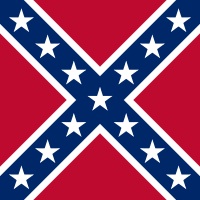 Secession summary: the secession of Southern States led to the establishment of the Confederacy and ultimately the Ceremonious War. Information technology was the most serious secession movement in the U.s.a. and was defeated when the Union armies defeated the Confederate armies in the Ceremonious War, 1861-65.
Causes Of Secession
Before the Civil War, the country was dividing betwixt Due north and South. Issues included States Rights and disagreements over tariffs only the greatest split was on the result of slavery, which was legal in the South but had gradually been banned by states n of the Mason-Dixon line. As the US acquired new territories in the due west, bitter debates erupted over whether or non slavery would be permitted in those territories. Southerners feared it was only a matter of time earlier the improver of new non-slaveholding states simply no new slaveholding states would requite command of the government to abolitionists, and the institution of slavery would be outlawed completely. They as well resented the notion that a northern industrialist could constitute factories, or any other business, in the new territories but agrestal Southern slaveowners could not move into territories where slavery was prohibited because their slaves would then exist free .
With the election in 1860 of Abraham Lincoln, who ran on a message of containing slavery to where it currently existed, and the success of the Republican Party to which he belonged – the commencement entirely regional party in US history – in that election, South Carolina seceded on December 20, 1860, the first state to ever officially secede from the United states of america. Iv months afterwards, Georgia, Florida, Alabama, Mississippi, Texas and Louisiana seceded as well. Later Virginia (except for its northwestern counties, which broke away and formed the Union-loyal state of West Virginia), Arkansas, N Carolina, and Tennessee joined them. The people of the seceded states elected Jefferson Davis as president of the newly formed Southern Confederacy.
Secession Leads To State of war
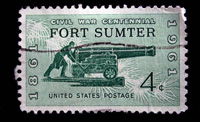
The Civil War officially began with the Boxing of Fort Sumter. Fort Sumter was a Union fort in the harbor of Charleston, South Carolina. After the U.S. Army troops inside the fort refused to vacate it, Confederate forces opened burn on the fort with cannons. It was surrendered without casualty (except for ii United states soldiers killed when their cannon exploded while firing a final salute to the flag) only led to the bloodiest war in the nation'due south history.
A Short History of Secession
From Articles of Confederation to "A More than Perfect Union." Many people, especially those wishing to support the South's right to secede in 1860–61, take said that when 13 American colonies rebelled confronting Great United kingdom of great britain and northern ireland in 1776, information technology was an act of secession. Others say the two situations were different and the colonies' revolt was a revolution. The war resulting from that colonial revolt is known as the American Revolution or the American War for Independence.
During that war, each of the rebelling colonies regarded itself every bit a sovereign nation that was cooperating with a dozen other sovereigns in a human relationship of convenience to achieve shared goals, the most firsthand beingness independence from Britain. On Nov. 15, 1777, the Continental Congress passed the Articles of Confederation—"Certain Articles of Confederation and Perpetual Union"—to create "The U.s.a. of America." That document asserted that "Each State retains is sovereignty, liberty and independence" while entering into "a firm league of friendship with each other" for their common defence and to secure their liberties, every bit well as to provide for "their mutual and general welfare."
Nether the Articles of Confederation, the key government was weak, without even an executive to atomic number 82 information technology. Its but political trunk was the Congress, which could not collect taxes or tariffs (it could inquire states for "donations" for the common skillful). It did have the ability to oversee foreign relations but could not create an regular army or navy to enforce strange treaties. Even this relatively weak governing document was not ratified by all usa until 1781. It is an onetime truism that "All politics are local," and never was that more than true than during the early days of the U.s.a.. Having just seceded from what they saw every bit a despotic, powerful central government that was likewise distant from its citizens, Americans were skeptical nearly giving much power to whatsoever government other than that of their own states, where they could exercise more direct command. However, seeds of nationalism were also sown in the war: the war required a united endeavor, and many men who likely would take lived out their lives without venturing from their own state traveled to other states as part of the Continental Army.
The weaknesses of the Manufactures of Confederation were obvious almost from the get-go. Foreign nations, ruled to varying degrees past monarchies, were inherently contemptuous of the American experiment of entrusting rule to the ordinary people. A authorities without an regular army or navy and picayune real power was, to them, simply a laughing stock and a plum ripe for picking whenever the opportunity arose.
Domestically, the lack of whatsoever compatible codes meant each country established its own form of government, a chaotic system marked at times by mob rule that burned courthouses and terrorized state and local officials. Land laws were passed and near immediately repealed; sometimes ex post facto laws made new codes retroactive. Collecting debts could be well-nigh impossible.
George Washington, writing to John Jay in 1786, said, "We take, probably, had too good an stance of human nature in forming our confederation." He underlined his words for emphasis. Jay himself felt the country had to become "one nation in every respect." Alexander Hamilton felt "the prospect of a number of petty states, with advent only of union," was something "diminutive and contemptible."
In May 1787, a Constitutional Convention met in Philadelphia to address the shortcomings of the Manufactures of Confederation. Some Americans felt information technology was an aristocratic plot, but every state felt a need to do something to improve the state of affairs, and smaller states felt a stronger central government could protect them confronting domination past the larger states. What emerged was a new constitution "in social club to provide a more perfect matrimony." It established the iii branches of the federal government—executive, legislative, and judicial—and provided for 2 houses inside the legislature. That Constitution, though amended 27 times, has governed the U.s. e'er since. It failed to clearly address two critical issues, all the same.
Information technology made no mention of the future of slavery. (The Northwest Ordinance, non the Constitution, prohibited slavery in the Northwest Territories, that surface area n of the Ohio River and along the upper Mississippi River.) It as well did not include whatever provision for a procedure by which a state could withdraw from the Union, or by which the Matrimony could exist wholly dissolved. To have included such provisions would have been, every bit some have pointed out, to have written a suicide clause into the Constitution. But the bug of slavery and secession would accept on towering importance in the decades to come, with no clear-cut guidance from the Founding Fathers for resolving them.
Offset Calls for Secession
Following ratification by 11 of the thirteen states, the government began operation nether the new U.S. Constitution in March 1789. In less than 15 years, states of New England had already threatened to secede from the Marriage. The first time was a threat to leave if the Assumption Bill, which provided for the federal authorities to assume the debts of the diverse states, were non passed. The next threat was over the expense of the Louisiana Purchase. Then, in 1812, President James Madison, the man who had done more than any other private to shape the Constitution, led the United states into a new state of war with U.k.. The New England states objected, for war would cut into their trade with Great britain and Europe. Resentment grew so potent that a convention was called at Hartford, Connecticut, in 1814, to discuss secession for the New England states. The Hartford Convention was the most serious secession threat up to that fourth dimension, but its delegates took no action.
Southerners had likewise discussed secession in the nation's early years, concerned over talk of abolishing slavery. But when button came to shove in 1832, it was non over slavery but tariffs. National tariffs were passed that protected Northern manufacturers but increased prices for manufactured appurtenances purchased in the predominantly agricultural South, where the Tariff of 1828 was dubbed the "Tariff of Abominations." The legislature of South Carolina declared the tariff acts of 1828 and 1832 were "unauthorized past the constitution of the United States" and voted them null, void and non-binding on the country.
President Andrew Jackson responded with a Proclamation of Strength, declaring, "I consider, and so, the power to annul a law of the U.s.a., causeless past 1 state, incompatible with the existence of the Union, contradicted expressly by the alphabetic character of the Constitution, inconsistent with every principle on which information technology was founded, and destructive of the great object for which it was formed." (Emphasis is Jackson's). Congress authorized Jackson to use armed forces forcefulness if necessary to enforce the law (every Southern senator walked out in protest earlier the vote was taken). That proved unnecessary, as a compromise tariff was canonical, and South Carolina rescinded its Nullification Ordinance.
The Nullification Crisis, as the episode is known, was the most serious threat of disunion the young land had yet confronted. It demonstrated both standing beliefs in the primacy of states rights over those of the federal authorities (on the part of South Carolina and other Southern states) and a belief that the chief executive had a right and responsibility to suppress any attempts to give individual states the right to override federal police.
The Abolitionism Movement, and Southern Secession
Betwixt the 1830s and 1860, a widening chasm developed between Due north and Southward over the upshot of slavery, which had been abolished in all states north of the Mason-Dixon line. The Abolitionism Movement grew in power and prominence. The slave holding South increasingly felt its interests were threatened, especially since slavery had been prohibited in much of the new territory that had been added west of the Mississippi River. The Missouri Compromise, the Dred Scott Decision instance, the issue of Popular Sovereignty (allowing residents of a territory to vote on whether it would be slave or free), and John Brown's Raid On Harpers Ferry all played a function in the intensifying debate. Whereas once Southerners had talked of an emancipation process that would gradually cease slavery, they increasingly took a hard line in favor of perpetuating it forever.
In 1850, the Nashville Convention met from June iii to June 12 "to devise and adopt some mode of resistance to northern assailment." While the delegates approved 28 resolutions affirming the South's ramble rights within the new western territories and similar issues, they substantially adopted a wait-and-see attitude before taking whatsoever drastic action. Compromise measures at the federal level macerated interest in a 2nd Nashville Convention, but a much smaller one was held in November. It approved measures that affirmed the right of secession but rejected any unified secession amongst Southern states. During the cursory presidency of Zachary Taylor, 1849-l, he was approached by pro-secession ambassadors. Taylor flew into a rage and declared he would raise an army, put himself at its head and strength any state that attempted secession back into the Union.
The irish potato famine that struck Ireland and Germany in the 1840s–1850s sent waves of hungry immigrants to America's shores. More than of them settled in the North than in the S, where the being of slavery depressed wages. These newcomers had sought refuge in the United States, not in New York or Virginia or Louisiana. To near of them, the U.Due south. was a single entity, non a drove of sovereign nations, and arguments in favor of secession failed to move them, for the most role.
The Ballot Of Abraham Lincoln And Nullification
The U.Southward. elections of 1860 saw the new Republican Party, a sectional political party with very piffling back up in the South, win many seats in Congress. Its candidate, Abraham Lincoln, won the presidency. Republicans opposed the expansion of slavery into the territories, and many party members were abolitionists who wanted to run into the "peculiar institution" concluded everywhere in the United States. Southward Carolina once more decided it was time to nullify its agreement with the other states. On Dec. xx, 1860, the Palmetto State approved an Ordinance of Secession, followed by a proclamation of the causes leading to its conclusion and another document that concluded with an invitation to class "a Confederacy of Slaveholding States."
The S Begins To Secede
S Carolina didn't intend to go it alone, as it had in the Nullification Crisis. Information technology sent ambassadors to other Southern states. Soon, six more than states of the Deep Southward—Georgia, Florida, Alabama, Mississippi, Texas and Louisiana—renounced their compact with the United States. Later on Confederate artillery fired on Fort Sumter in Charleston Harbor, Southward Carolina, on April 12, 1861, Abraham Lincoln called for 75,000 volunteers to put down the rebellion. This led iv more states— Virginia, Arkansas, N Carolina, and Tennessee—to secede; they refused to take up arms against their Southern brothers and maintained Lincoln had exceeded his constitutional powers by not waiting for approval of Congress (as Jackson had washed in the Nullification Crisis) before declaring war on the South. The legislature of Tennessee, the last state to leave the Union, waived any opinion as to "the abstract doctrine of secession," just asserted "the right, equally a free and contained people, to alter, reform or abolish our form of government, in such manner every bit we think proper."
In addition to those states that seceded, other areas of the land threatened to. The southern portions of Northern states bordering the Ohio River held pro-Southern, pro-slavery sentiments, and there was talk inside those regions of seceding and casting their lot with the South.
A portion of Virginia did secede from the Old Dominion and formed the Union-loyal state of West Virginia. Its creation and admittance to the Union raised many constitutional questions—Lincoln'due south cabinet split up 50–50 on the legality and expediency of admitting the new country. But Lincoln wrote, "It is said that the admission of West-Virginia is secession, and tolerated only considering information technology is our secession. Well, if nosotros telephone call it past that name, in that location is still difference enough betwixt secession against the constitution, and secession in favor of the constitution."
The Ceremonious War: The End Of The Secession Movement
4 bloody years of war concluded what has been the most pregnant attempt past states to secede from the Spousal relationship. While the South was forced to carelessness its dreams of a new Southern Confederacy, many of its people have never accepted the idea that secession was a violation of the U.Southward. Constitution, basing their arguments primarily on Commodity 10 of that constitution: "The powers non delegated to the The states by the Constitution, nor prohibited past it to us, are reserved to united states of america respectively, or to the people."
Ongoing Calls For Secession & The Eternal Question: "Can A Country Legally Secede?"
The ongoing debate continues over the question that has been asked since the forming of the United states itself: "Tin a state secede from the Union of the U.s.a.?" Whether it is legal for a country to secede from the United States is a question that was fiercely debated earlier the Civil War (run into the article below), and even at present, that debate continues. From time to time, new calls have arisen for i country or some other to secede, in reaction to political and/or social changes, and organizations such as the League of the South openly support secession and the germination of a new Southern republic.
Manufactures Featuring Secession From History Net Magazines
Featured Article
Was Secession Legal
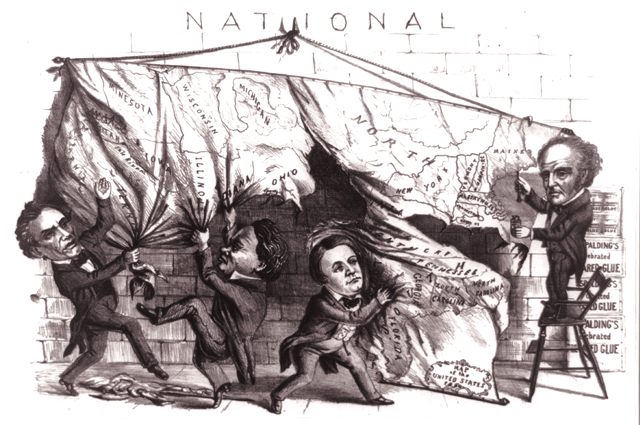
Southerners insisted they could legally bolt from the Union.
Northerners swore they could not.
War would settle the matter for skilful.
Over the centuries, various excuses have been employed for starting wars. Wars have been fought over state or honor. Wars have been fought over soccer (in the instance of the conflict between Honduras and El Salvador in 1969) or even the shooting of a pig (in the example of the fighting between the United States and Britain in the San Juan Islands in 1859).
But the Ceremonious State of war was largely fought over equally compelling interpretations of the U.South. Constitution. Which side was the Constitution on? That's difficult to say.
The interpretative debate—and ultimately the war—turned on the intent of the framers of the Constitution and the meaning of a unmarried word: sovereignty—which does not actually announced anywhere in the text of the Constitution.
Southern leaders like John C. Calhoun and Jefferson Davis argued that the Constitution was substantially a contract between sovereign states—with the contracting parties retaining the inherent authority to withdraw from the understanding. Northern leaders like Abraham Lincoln insisted the Constitution was neither a contract nor an agreement betwixt sovereign states. It was an agreement with the people, and once a state enters the Union, it cannot leave the Union.
It is a touchstone of American ramble law that this is a nation based on federalism—the union of states, which retain all rights not expressly given to the federal government. After the Declaration of Independence, when almost people still identified themselves not equally Americans but as Virginians, New Yorkers or Rhode Islanders, this union of "Free and Independent States" was divers equally a "confederation." Some framers of the Constitution, like Maryland's Luther Martin, argued the new states were "dissever sovereignties." Others, similar Pennsylvania'south James Wilson, took the opposite view that usa "were independent, not Individually but Unitedly."
Supporting the individual sovereignty claims is the fierce independence that was asserted by states under the Manufactures of Confederation and Perpetual Matrimony, which actually established the proper name "The Us of America." The lease, however, was careful to maintain the inherent sovereignty of its composite land elements, mandating that "each land retains its sovereignty, freedom, and independence, and every power, jurisdiction, and right, which is not by this Confederation expressly delegated." It affirmed the sovereignty of the respective states by declaring, "The said states hereby severally enter into a business firm league of friendship with each other for their common defence [sic]." There would seem piffling question that united states agreed to the Confederation on the limited recognition of their sovereignty and relative independence.
Supporting the later view of Lincoln, the perpetuality of the Matrimony was referenced during the Confederation period. For example, the Northwest Ordinance of 1787 stated that "the said territory, and the States which may be formed therein, shall forever remain a function of this confederacy of the United States of America."
The Confederation produced countless conflicts as diverse states issued their own money, resisted national obligations and favored their ain citizens in disputes. James Madison criticized the Manufactures of Confederation equally reinforcing the view of the Matrimony equally "a league of sovereign powers, not equally a political Constitution by virtue of which they are become one sovereign power." Madison warned that such a view could lead to the "dissolving of the United States birthday." If the affair had ended there with the Articles of Confederation, Lincoln would have had a much weaker instance for the court of constabulary in taking up arms to preserve the Union. His legal case was saved by an 18th-century bait-and-switch.
A convention was called in 1787 to amend the Articles of Confederation, but several delegates eventually concluded that a new political structure—a federation—was needed. Equally they debated what would become the Constitution, the status of the states was a primary concern. George Washington, who presided over the convention, noted, "Information technology is obviously impracticable in the federal government of these states, to secure all rights of independent sovereignty to each, and even so provide for the interest and safety of all." Of course, Washington was more than concerned with a working federal government—and national ground forces—than resolving the question of a state'southward inherent right to withdraw from such a union. The new regime forged in Philadelphia would have articulate lines of authorization for the federal system. The premise of the Constitution, nonetheless, was that states would still agree all rights not expressly given to the federal regime.
The final version of the Constitution never actually refers to us as "sovereign," which for many at the time was the ultimate legal game-changer. In the U.S. Supreme Court'due south landmark 1819 decision in McCulloch v. Maryland, Chief Justice John Marshall espoused the view later embraced by Lincoln: "The government of the Union…is emphatically and truly, a government of the people." Those with differing views resolved to exit the affair unresolved—and thereby planted the seed that would grow into a total ceremonious war. Just did Lincoln win past force of arms or forcefulness of argument?
On January 21, 1861, Jefferson Davis of Mississippi went to the well of the U.S. Senate ane final time to denote that he had "satisfactory show that the State of Mississippi, by a solemn ordinance of her people in convention assembled, has declared her separation from the Us." Before resigning his Senate seat, Davis laid out the ground for Mississippi's legal claim, coming down squarely on the fact that in the Declaration of Independence "the communities were declaring their independence"—non "the people." He added, "I have for many years advocated, as an essential attribute of state sovereignty, the correct of a country to secede from the Marriage."
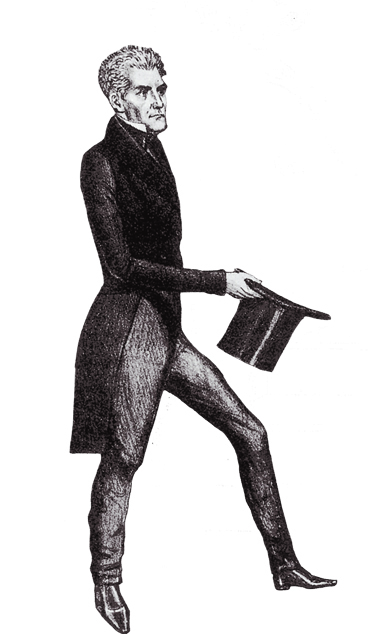 Davis' position reaffirmed that of John C. Calhoun, the powerful Southward Carolina senator who had long viewed u.s.a. as independent sovereign entities. In an 1833 spoken language upholding the correct of his domicile country to nullify federal tariffs it believed were unfair, Calhoun insisted, "I keep the ground that [the] constitution was made by usa; that it is a federal union of u.s.a., in which the several States still retain their sovereignty." Calhoun allowed that a state could be barred from secession by a vote of ii-thirds of the states under Article V, which lays out the process for alteration the Constitution.
Lincoln'due south inauguration on March iv, 1861, was 1 of the least cheering beginnings for any president in history. His election was used as a rallying cry for secession, and he became the caput of a country that was falling apart fifty-fifty as he raised his paw to take the oath of office. His starting time inaugural accost left no uncertainty virtually his legal position: "No State, upon its own mere move, can lawfully get out of the Union, that resolves and ordinances to that upshot are legally void, and that acts of violence, inside any State or States, confronting the authority of the U.s., are insurrectionary or revolutionary, co-ordinate to circumstances."
While Lincoln expressly called for a peaceful resolution, this was the final straw for many in the South who saw the speech as a veiled threat. Clearly when Lincoln took the oath to "preserve, protect, and defend" the Constitution, he considered himself jump to preserve the Union as the physical creation of the Announcement of Independence and a primal field of study of the Constitution. This was fabricated plain in his next major legal argument—an address where Lincoln rejected the notion of sovereignty for states equally an "ingenious sophism" that would pb "to the complete devastation of the Wedlock." In a Fourth of July message to a special session of Congress in 1861, Lincoln declared, "Our States have neither more, nor less power, than that reserved to them, in the Wedlock, by the Constitution—no one of them ever having been a Country out of the Union. The original ones passed into the Marriage even before they bandage off their British colonial dependence; and the new ones each came into the Union directly from a condition of dependence, excepting Texas. And even Texas, in its temporary independence, was never designated a State."
It is a brilliant framing of the consequence, which Lincoln gain to narrate as zippo less than an assail on the very notion of democracy:
Our popular government has often been chosen an experiment. Two points in it, our people have already settled—the successful establishing, and the successful administering of it. One still remains—its successful maintenance against a formidable [internal] endeavor to overthrow it. Information technology is now for them to demonstrate to the world, that those who can adequately carry an election, tin besides suppress a rebellion—that ballots are the rightful, and peaceful, successors of bullets; and that when ballots take fairly, and constitutionally, decided, there can exist no successful appeal, back to bullets; that there can exist no successful appeal, except to ballots themselves, at succeeding elections. Such will be a dandy lesson of peace; teaching men that what they cannot take by an election, neither can they take it by a war—teaching all, the folly of being the beginners of a war.
Lincoln implicitly rejected the view of his predecessor, James Buchanan. Buchanan agreed that secession was non allowed under the Constitution, but he also believed the national government could non use forcefulness to continue a state in the Union. Notably, however, it was Buchanan who sent troops to protect Fort Sumter vi days after South Carolina seceded. The subsequent seizure of Fort Sumter by rebels would push Lincoln on April 14, 1861, to telephone call for 75,000 volunteers to restore the Southern states to the Union—a decisive move to war.
Lincoln showed his souvenir equally a litigator in the July 4th address, though it should be noted that his scruples did not end him from clearly violating the Constitution when he suspended habeas corpus in 1861 and 1862. His argument also rejects the suggestion of people similar Calhoun that, if states tin modify the Constitution under Commodity V by democratic vote, they can agree to a country leaving the Union. Lincoln'southward view is absolute and treats secession as nothing more than rebellion. Ironically, as Lincoln himself acknowledged, that places the states in the same position as the Constitution's framers (and presumably himself as Rex George).
Just he did note 1 telling difference: "Our adversaries take adopted some Declarations of Independence; in which, unlike the good old one, penned past Jefferson, they omit the words 'all men are created equal.'"
 Lincoln'southward argument was more than convincing, but but up to a point. The S did in fact secede because it was unwilling to accept decisions by a bulk in Congress. Moreover, the disquisitional passage of the Constitution may be more of import than the status of us when independence was declared. Davis and Calhoun'due south argument was more than compelling under the Articles of Confederation, where there was no express waiver of withdrawal. The reference to the "perpetuity" of the Wedlock in the Articles and such documents every bit the Northwest Ordinance does not necessarily mean each country is bound in perpetuity, but that the nation itself is so created.
Subsequently the Constitution was ratified, a new government was formed by the consent of the states that clearly established a single national regime. While, as Lincoln noted, the states possessed powers not expressly given to the federal government, the federal government had sole power over the defense force of its territory and maintenance of the Union. Citizens under the Constitution were guaranteed free travel and interstate commerce. Therefore information technology is in conflict to suggest that citizens could find themselves separated from the country as a whole past a seceding state.
Moreover, while neither the Annunciation of Independence nor the Constitution says states tin can not secede, they too practise not guarantee states such a right nor refer to us as sovereign entities. While Calhoun's argument that Article V allows for irresolute the Constitution is attractive on some levels, Commodity V is designed to amend the Constitution, not the Union. A clearly ameliorate argument could be made for a duly enacted amendment to the Constitution that would let secession. In such a example, Lincoln would clearly take been warring against the democratic process he claimed to defend.
Neither side, in my view, had an overwhelming statement. Lincoln's position was the ane near likely to be upheld past an objective court of law. Faced with ambiguous founding and ramble documents, the spirit of the linguistic communication conspicuously supported the view that the original states formed a marriage and did non retain the sovereign authority to secede from that union.
Of course, a rebellion is ultimately a competition of arms rather than arguments, and to the victor goes the argument. This legal dispute would be resolved not by lawyers but by more practical men such as William Tecumseh Sherman and Thomas "Stonewall" Jackson.
 Ultimately, the War Between the States resolved the Constitution'due south meaning for any states that entered the Union later on 1865, with no delusions about the contractual agreement of the parties. Thus, 15 states from Alaska to Colorado to Washington entered in the full understanding that this was the view of the Union. Moreover, the enactment of the 14th Amendment strengthened the view that the Constitution is a compact between "the people" and the federal regime. The amendment affirms the power of usa to make their own laws, but those laws cannot "abridge the privileges or immunities of citizens of the United States."
In that location remains a separate guarantee that runs from the federal authorities direct to each American citizen. Indeed, information technology was after the Ceremonious War that the notion of being "American" became widely accepted. People now identified themselves every bit Americans and Virginians. While the Due south had a plausible legal merits in the 19th century, there is no plausible argument in the 21st century. That argument was answered past Lincoln on July four, 1861, and more than decisively at Appomattox Court Firm on April 9, 1865.
Jonathan Turley is one of the nation'due south leading constitutional scholars and legal commentators. He teaches at George Washington University.
Commodity originally published in the November 2010 issue of America's Civil War.
Secession: Revisionism Or Reality
Second: Secession – Revisionism or Reality
Secession fever revisited
We can accept an honest look at history, or just revise information technology to make information technology more palatable
Attempt this version of history: 150 years ago this spring, North Carolina and Tennessee became the final 2 Southern states to secede illegally from the sacred American Union in order to keep 4 1000000 blacks in perpetual chains. With Jefferson Davis newly ensconced in his Richmond capital simply a hundred miles south of Abraham Lincoln'southward legally elected government in Washington, recruiting volunteers to fight for his "nation," at that place could be little dubiousness that the rebellion would before long plough bloody. The Union was understandably prepared to fight for its own existence.
 Or should the scenario read this way? A century and a half agone, North Carolina and Tennesencounter joined other brave Southern states in asserting their right to govern themselves, limit the evils of unchecked federal power, protect the integrity of the cotton marketplace from burdensome tariffs, and fulfill the hope of liberty that the nation's founders had guaranteed in the Declaration of Independence. With Abraham Lincoln'south hostile minority government now raising militia to invade sovereign states, there could be petty doubt that peaceful secession would soon turn into bloody war. The Confederacy was understandably prepared to fight for its ain freedom.
Which version is true? And which is myth? Although the Ceremonious State of war sesquicentennial is just a few months old, questions like this, which virtually serious readers believed had been asked and answered fifty—if not 150—years ago, are resurfacing with surprising frequency. So-called Southern heritage Web sites are ablaze with alternative explanations for secession that make such scant mention of chattel slavery that the modern observer might call back shackled plantation laborers were dues-paying members of the AFL-CIO. Some of the more egregious comments currently proliferating on the new Civil War blogs of both the New York Times ("Disunion") and Washington Post ("A Business firm Divided") suggest that many contributors keep to believe slavery had little to do with secession: Lincoln had no correct to serve every bit president, they contend; his policies threatened state sovereignty; Republicans wanted to impose crippling tariffs that would accept destroyed the cotton industry; it was all about honor. Edward Brawl, author of Slaves in the Family, has dubbed such skewed retentivity every bit "the whitewash explanation" for secession. He is right.
As Brawl and scholars like William Freehling, author of Prelude to Civil State of war and The Route to Disunion, accept pointed out, all today's readers need to do in gild to understand what truly motivated secession is to study the proceedings of the state conventions where separation from the Union was openly discussed and enthusiastically authorized. Many of these dusty records take been digitized and fabricated bachelor online—discrediting this fairy tale once and for all.
Consider these excerpts. Southward Carolina voted for secession beginning in December 1860, bluntly citing the rationale that Northern states had "denounced as sinful the institution of slavery."
Georgia delegates similarly warned against the "progress of anti-slavery." As delegate Thomas R.R. Cobb proudly insisted in an 1860 address to the Legislature, "Our slaves are the most happy and contented of workers."
Mississippians boasted, "Our position is thoroughly identified with the institution of slavery—the greatest material interest of the world…. There is no choice left us only submission to the mandates of abolition, or a dissolution of the Union." And an Alabama newspaper opined that Lincoln'southward election manifestly showed the Due north planned "to free the negroes and force amalgamation between them and the children of the poor men of the Due south."
Certainly the try to "whitewash" secession is non new. Jefferson Davis himself was maddeningly vague when he provocatively asked fellow Mississippians, "Volition you be slaves or will you be independent?…Will yous consent to exist robbed of your property [or] strike bravely for liberty, property, honor and life?" Non-slaveholders—the bulk of Southerners—were bombarded with similarly inflammatory rhetoric designed to paint Northerners as integrationist aggressors scheming to make blacks the equal of whites and impose race-mixing on a helpless population. The whitewash worked in 1861—but does that mean that it should be taken seriously today?
From 1960-65, the Civil War Centennial Commission wrestled with similar issues, and ultimately bowed likewise deeply to segregationists who worried that an accent on slavery—much less freedom—would embolden the civil rights movement then beginning to gain national traction. Keeping the focus on battlefield re-enactments, regional pride and uncritical celebration took the spotlight off the existent cause of the war, and its potential inspiration to modern freedom marchers and their sympathizers. Some members of the national centennial committee actually argued against staging a 100th ceremony commemoration of emancipation at the Lincoln Memorial. Doing so, they contended, would encourage "agitators."
In a style, it is more hard to understand why so much space is over again being devoted to this debate. Fifty years have passed since the centennial. The nation has been vastly transformed by legislation and attitude. We supposedly alive in a "mail service-racial era." And just two years ago, Americans (including voters in the old Confederate states of Virginia and North Carolina), chose the start African-American president of the United States.
Or is this, perhaps, the real underlying problem—the salt that still irritates the scab roofing this land's unhealed racial dissever?
Simply every bit some Southern conservatives decried a 1961 emphasis on slavery because it might embolden ceremonious rights, 2011 revisionists may have a subconscious calendar of their own: Beat dorsum federal authority, reinvigorate united states of america' rights motion and perhaps turn back the re-election of a black president who has been labeled equally everything from a Communist to a greenhorn (not dissimilar the insults hurled at the freedom riders half a century ago).
L years from now, Americans will either celebrate the honesty that animated the Civil War sesquicentennial, or subject it to the same criticisms that have been leveled against the centennial celebrations of the 1960s. The choice is ours. As Lincoln in one case said, "The struggle of today is not birthday for today—information technology is for a vast hereafter besides."
Harold Holzer is chairman of the Abraham Lincoln Bicentennial Foundation.
Secession Articles
[cat totalposts='25' showtime='0′ category='1194′ extract='true' society='desc' orderby='post_date']
Source: https://www.historynet.com/secession/

Post a Comment for "What Does the South Need to Do in Order to Become Part of the Union Again"